Look, I’ll be the first to admit it: the phrase "jobs that don't exist yet" is usually followed by someone trying to sell you a $2,000 online course about NFTs. It feels like corporate fluff. But here’s the kicker—the U.S. Department of Labor estimates that 65% of children entering primary school today will end up working in jobs that haven't been invented yet. That statistic is from a few years back, and honestly, it terrifies me more than a little.
We are currently teaching our kids to memorize formulas for a world that runs on algorithms. We are drilling them on cursive while AI drafts entire novels. If we don't pivot our educational focus, we aren't just failing our students; we are sending them into a job market with a map to a city that no longer exists.
But here is the good news: we don't need a crystal ball to prepare them. We just need to look at the skills that underpin adaptability. After years of talking to educators, tech founders, and yes, a few Gen Z interns, I've narrowed down the 10 surprising skills that will actually matter. And spoiler alert: they aren't what you think.
The Death of the "Correct Answer"
Before we dive into the list, let's address the elephant in the room. Our current education system is obsessed with efficiency. We teach kids that there is one right answer, and it's at the back of the textbook. But automation is gobbling up every job that relies on a "correct answer."

The jobs that remain—and the new ones that will emerge—require people who are comfortable with ambiguity. We need kids who can look at a chaotic problem and say, "There are ten ways to solve this, and none of them are in the manual."
So, how do we teach that? We ditch the flashcards and lean into messy, unstructured thinking.
1. "No-Bot" Engineering (Prompting as a Superpower)
We hear about "prompt engineering" for AI, but that sounds too technical. What kids actually need is "No-Bot" Engineering—the ability to get a machine to do what they want by understanding its limitations. It’s not about typing "write an essay." It’s about knowing how to iterate, refine, and debug the interaction.
How to teach it: Instead of banning ChatGPT, use it in class. Have students ask it a question, then grade the question, not the answer. If the AI gives a bad response, the student failed at the prompt, not the AI. This teaches critical thinking and communication simultaneously. It’s the new "computer literacy," but with a keyboard and a brain.
2. "Jugaad" Thinking (The Art of Frugal Innovation)
I love the Hindi word Jugaad. It means a hack, a workaround, or an innovative fix using limited resources. In the West, we call it "resourcefulness," but that sounds too corporate. The future belongs to kids who can make something out of nothing.
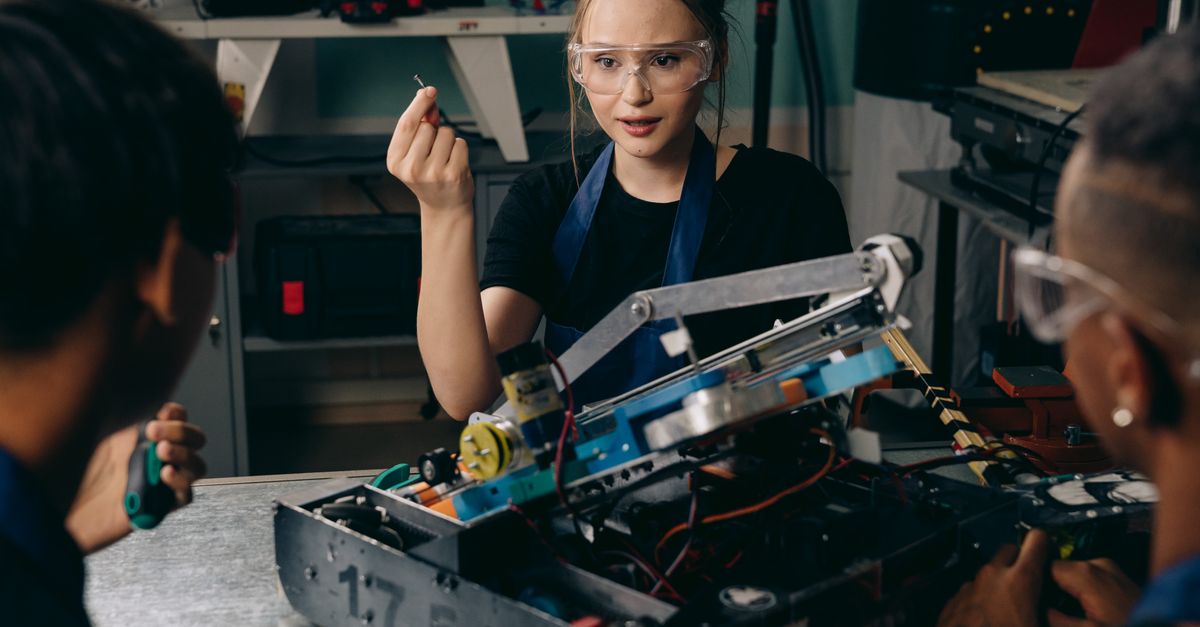
How to teach it: Give them broken appliances and duct tape. Sounds crazy, right? But a "Fix-It Friday" where students have to repair a toaster without instructions builds spatial reasoning and problem-solving. It’s not about the toaster; it’s about the confidence to say, "I can figure this out."
3. Digital Body Language
We all know that 90% of communication is non-verbal. But in a remote-first world, the "body" is a webcam. Digital Body Language is the ability to convey empathy, urgency, and authority through text, tone, and timing. It’s knowing when to send an email vs. a Slack message vs. a voice note.
How to teach it: Stop letting kids email teachers casually. Require them to write professional emails with subject lines and polite closings. Roleplay a "Zoom meeting" where they have to manage a conflict without seeing the other person’s full face. This is the new social etiquette, and it’s woefully under-taught.
4. "Cognitive Flexibility" (The Career Chameleon)
Here’s what most people miss: Specialization is risky. If you train for one specific job that gets automated, you’re toast. We need to teach "Cognitive Flexibility"—the mental ability to switch between thinking about two different concepts, and to think about multiple concepts simultaneously.
How to teach it: Stop the rigid scheduling. Instead of 50 minutes of Math followed by 50 minutes of History, combine them. Teach the history of the Industrial Revolution through statistics. This forces the brain to make connections, building a neural network that can pivot when the job market shifts.
5. "Techno-Moral" Reasoning
AI is going to make decisions that affect life and death—from self-driving cars to medical diagnoses. Who is going to program the ethics? We need kids who can argue about data privacy and algorithmic bias with the same fluency they argue about sports.
How to teach it: Don't just teach coding; teach consequences. Use case studies of real AI failures (like biased hiring algorithms). Ask them, "If you were the programmer, what would you do?" This isn't a computer class; it's a philosophy class with a laptop.
6. The "Deep Work" Discipline
In a world of notifications, the ability to focus is a superpower. Cal Newport calls it "Deep Work." I call it the ability to actually finish a book without checking your phone.
How to teach it: This is the hardest one for parents. We need to allow boredom. Do not schedule every minute of your child's day. Let them stare at the wall. Let them be bored. Boredom is the breeding ground for creativity. In classrooms, institute "Silent 20"—20 minutes of pure, uninterrupted reading or writing. No screens. No noise.
7. "Micro-Resilience" (Handling the Tiniest Failures)
We talk about "grit," but that sounds like you need to climb Everest. The reality is that the future will be full of tiny, daily failures—a code that won't compile, a viral video that flops, a pitch that gets rejected. Micro-resilience is the ability to bounce back from a 10-minute setback without losing your lunch.
How to teach it: Introduce "Failure Reports." When a student gets an answer wrong, they don't just correct it; they write a two-sentence report on why they got it wrong and how they felt. This normalizes the emotional loop of failure, which is the #1 skill in a rapidly changing economy.
8. Cross-Cultural "Bridging"
Globalization isn't new, but the scale of collaboration is. Your kids won't just work with people in London; they'll work with people in Bangalore, Shanghai, and remote villages in South America. Cultural empathy is a hard skill, not a soft one.
How to teach it: Stop the "Pen Pal" program that lasts one week. Instead, do a joint project with a classroom on another continent. Use tools like Flipgrid to have them debate a topic. The goal isn't to agree, but to understand why the other side thinks the way they do.
9. Algorithmic Curiosity (Data Intuition)
We don't need every kid to be a data scientist. But they need to be "Data Literate." They need to know that "correlation does not equal causation" and that a chart can be manipulated.
How to teach it: Show them misleading infographics from social media. Ask them, "What is this chart hiding?" This turns them from passive consumers of media into active investigators.
10. The Art of "Unlearning"
This is the meta-skill. The most important skill is knowing when to forget what you know. The world is moving so fast that the "best practices" you learned in 2025 will be obsolete by 2030.

How to teach it: This is an attitude, not a lesson. As parents and teachers, we need to model it. We need to say, "I was wrong about this, and here is the new information." If a child sees an adult adapt and change their mind, they will learn that it's safe to do so.
The Parent-Teacher Secret
Here’s the ugly truth: You can’t teach what you don’t practice. If you are a parent who checks your email during dinner, you are teaching your kid that "Deep Work" is a lie. If you are a teacher who uses a rubric for every single assignment, you are killing "Jugaad."
We need to stop treating education like a factory line and start treating it like a garden. We don't know what the fruit is going to look like, but we know the soil needs to be rich.
So, the next time you look at your child's homework, don't ask, "Did you get the right answer?"
Ask them, "What did you try today?"
Because in the future, the try-ers are the only ones who are going to make it.
